Can You Sign Away Your Parental Rights in Minnesota? What the Law Actually Says
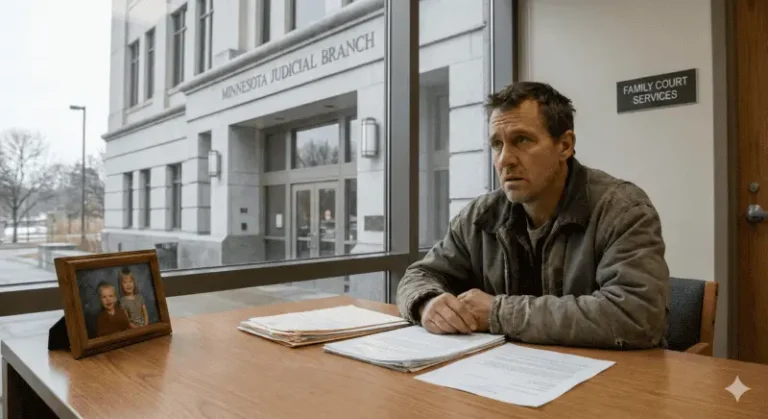
In 26 years of practicing family law in Minnesota, this is one of the most common questions I hear, usually from a father who has called the office frustrated, burned out, or at a breaking point in his relationship with his child’s other parent. The question goes something like this: “Is there a form I can sign to just give up my parental rights?”
The short answer is no.
The longer answer is what this post is about. I’m Jason Kohlmeyer, a family law attorney for over 25 years at Kohlmyer Hagen Law in Mankato and Rochester. I want to walk you through what Minnesota law actually says about terminating parental rights, because there is a lot of misinformation out there, and understanding the reality can save you from a very costly mistake.
The Myth of “Signing Off” on Parental Rights in Minnesota
The idea that a parent can simply sign a piece of paper and walk away from their legal responsibilities to a child is one of the most common myths that I hear in family law. I hear it called different things such as: “signing off,” “waiving my rights,” “giving up custody,” or just “I’m done.” The caller often assumes there is a government form somewhere that makes this possible and you just sign and file it.
There is no such form. The Minnesota Judicial Branch’s own help page on termination of parental rights is direct about this: the courts do not publish forms or instructions to start a termination of parental rights case. That is not an oversight or some kind of error. It reflects something important about how Minnesota law approaches the parent-child relationship that breaking that parent-child bond requires a lot of work.
What Minnesota Law Actually Requires
Under Minn. Stat. § 260C.301, a court may terminate parental rights only after a formal petition, proper legal notice to all parties, and a full hearing. Even when a parent is voluntarily consenting, a Minnesota judge must find that termination serves the “best interests of the child”. The statute was amended in 2024 and again in 2025, but the core framework has not changed: termination requires a court order, and a court order requires a court process.
You might be thinking this is just the government being the governnment making a person jump. through a lot of hoops. This is not just bureaucratic red tape. The Minnesota legislature has made a deliberate policy choice that the parent-child relationship carries so much legal and emotional weight that it should be dissolved by simply downloading a form and signing your name and dropping it off with $45 at the courthouse. They believe it should be a big process, one that requires a lot of thought and, yes, work.
The legal standard for involuntary termination under Minn. Stat. § 260C.317 is clear and convincing evidence, which is a very high legal standard. Courts take this very seriously.
The Two Situations Where Termination Is Actually Possible
In Minnesota Family law courts, there are really only two pathways that come up in the real world, and neither of them is the simple “sign off” that people are imagining.
Stepparent Adoption
This is the most common scenario I see where a parent voluntarily relinquishes rights. If your child has a stepparent who is willing and legally qualified to adopt, and the custodial parent and stepparent are prepared to go through the full adoption process, then yes, you can consent to the termination of your parental rights. But the key word there is “process.”
Under Minnesota law, you would sign a formal consent form in front of two witnesses and a notary or court administrator. After signing, you have 10 business days to revoke your consent, a protection built into the law if you change your mind. A court hearing is still required, and the judge must approve the termination as being in the child’s best interests. If the child is 14 or older, the child must also give written consent to the adoption. There are also requirements about background checks and post-placement reviews.
There is something else worth knowing here. Once that adoption is finalized, the person signing the document is legally out. You will not owe child support going forward. But any past-due support that accrued before the termination order still remains your legal obligation under Minn. Stat. § 260C.317. That debt does not disappear with your parental rights.
This also means 2 years later, if you change your mind, you cannot go back and reopen the case. You will not be a parent to that child any longer, which means the new parent is under no legal obligation to let you talk to or see that child.
Involuntary Termination by the County
The second pathway is not something a parent typically initiates for themselves. or wants to have happen. Involuntary termination of parental rights, called a TPR in the legal system, is brought by the county attorney in situations involving serious abuse, neglect, abandonment, or a pattern of conduct that has rendered a parent unfit. Under Minn. Stat. § 260C.301, specific statutory grounds must be proven, and the county must also generally demonstrate that reasonable efforts were made to reunify the family before termination is sought.
This is not a tool for avoiding child support. Courts are very explicit about this. If the only reason a parent wants rights terminated is financial, a judge will not grant it, because eliminating child support at a child’s expense is not in the child’s best interests.
Termination Is Permanent. Or Is It?
For most of the time I have practiced family law, my advice on this point was simple: termination is permanent. You do not get a second chance because circumstances change or a new relationship makes parenting inconvenient. You cannot come back five years later and tell a judge you are ready to be a parent now.
That is still largely true. But there is a development in Minnesota law worth knowing about. The Family Reunification Act, most recently amended in 2024 and taking effect in phases starting January 1, 2025, created a narrow pathway under Minn. Stat. § 260C.329 for a previously terminated parent to petition the court o reestablish rights in very certain circumstances. This applies only when a child remains in the foster care system rather than being privately adopted, the child has been in foster care for at least 48 months after termination, and the child wants to live with the parent. Rights that were voluntarily terminated through a private stepparent adoption cannot be reestablished under this pathway. This is tricky, you’ll need a lawyer to help with this.
This is a relatively narrow exception, and it involves a significant legal process. I am not raising it to suggest that termination is reversible in any typical sense. I raise it because it is a real change in Minnesota law and because complete information matters when people are thinking through decisions this serious.
Common Questions I Hear About This Topic
Can I give up my parental rights to avoid paying child support?
No. Minnesota courts will not terminate parental rights for this reason alone. The law is clear that financial motivation is not “good cause” for termination under the statute.
Can I terminate the other parent’s rights without their consent?
This is extremely difficult and requires proving one of the specific statutory grounds in Minn. Stat. § 260C.301, such as abandonment, neglect, or parental unfitness. Even then, the county attorney typically has to be involved or the petition goes through juvenile court. Courts in Minnesota generally prefer two-parent involvement and will only cut a parent out of a child’s life when the evidence demands it.
If I give up my rights in a stepparent adoption, can I still see my child?
Once the adoption is finalized, you have no legal right to visitation. Courts can approve a voluntary contact agreement under Minn. Stat. § 260C.619 between the parties, but this is not enforceable as a custody or parenting time order and requires everyone’s cooperation.
What if I just stop showing up, stop paying, and disappear?
Abandonment is one of the statutory grounds for involuntary termination under Minn. Stat. § 260C.301, specifically defined as failure to have regular contact with a child for six months without good cause. Disappearing does not end your legal obligations. It can, however, create a basis for the other parent to initiate a TPR proceeding or a stepparent adoption over your objection. I will say that in my experience this is not invoked very often if ever.
The Bottom Line on Parental Rights in Minnesota
If someone is telling you they can help you “sign off” your parental rights with a quick form, treat that the way you would treat any promise that sounds too easy to be true. Minnesota family law does not work that way, and there is no shortcut.
What I can tell you after 26 years of doing this work is that the calls I get about “signing off” are often really calls about something else: a parent who is exhausted, who feels pushed out of a child’s life, who is drowning in child support obligations and does not see a path forward, or who genuinely believes the child is better off with a stepparent who is fully invested. Those are real situations that deserve real legal advice, not a form.
The LawHelp Minnesota fact sheet on termination of parental rights is a solid plain-language resource if you want to read more before talking to an attorney.
Kohlmeyer Hagen, Law Office
Minnesota courts now recognize what fathers have always known: children need their dads. But the law only protects the father who shows up. With 25 years of Minnesota family law experience, I have helped fathers across the state establish paternity, secure parenting time, and protect their relationships with their children. If you are ready to do the same, call Kohlmeyer Hagen, Law Office Chtd. at 507-625-5000 or schedule a consultation at khmnlaw.com/contact.